Signed in as:
filler@godaddy.com

Maine, New Hampshire, Vermont, Massachusetts, Rhode Island, Connecticut, New York, New Jersey, Pennsylvania, Delaware, Maryland, Virginia, West Virginia, North Carolina, South Carolina, Georgia, Florida, and Alabama
These state snapshots help children learn key facts, symbols, Indigenous history, and why each state ma
Opening Statement
Maine is the northeasternmost state in the United States and is known for its rocky coastline, deep forests, rivers, and lighthouses. Long before Maine became a state, Indigenous nations lived along its shores and inland forests, using deep knowledge of the land and sea. Today, Maine helps children learn about oceans, wildlife, seasons, and living in balance with nature.
Statehood: March 15, 1820
Capital: Augusta
Nickname: The Pine Tree State
State Motto: Dirigo
(“I Lead”)
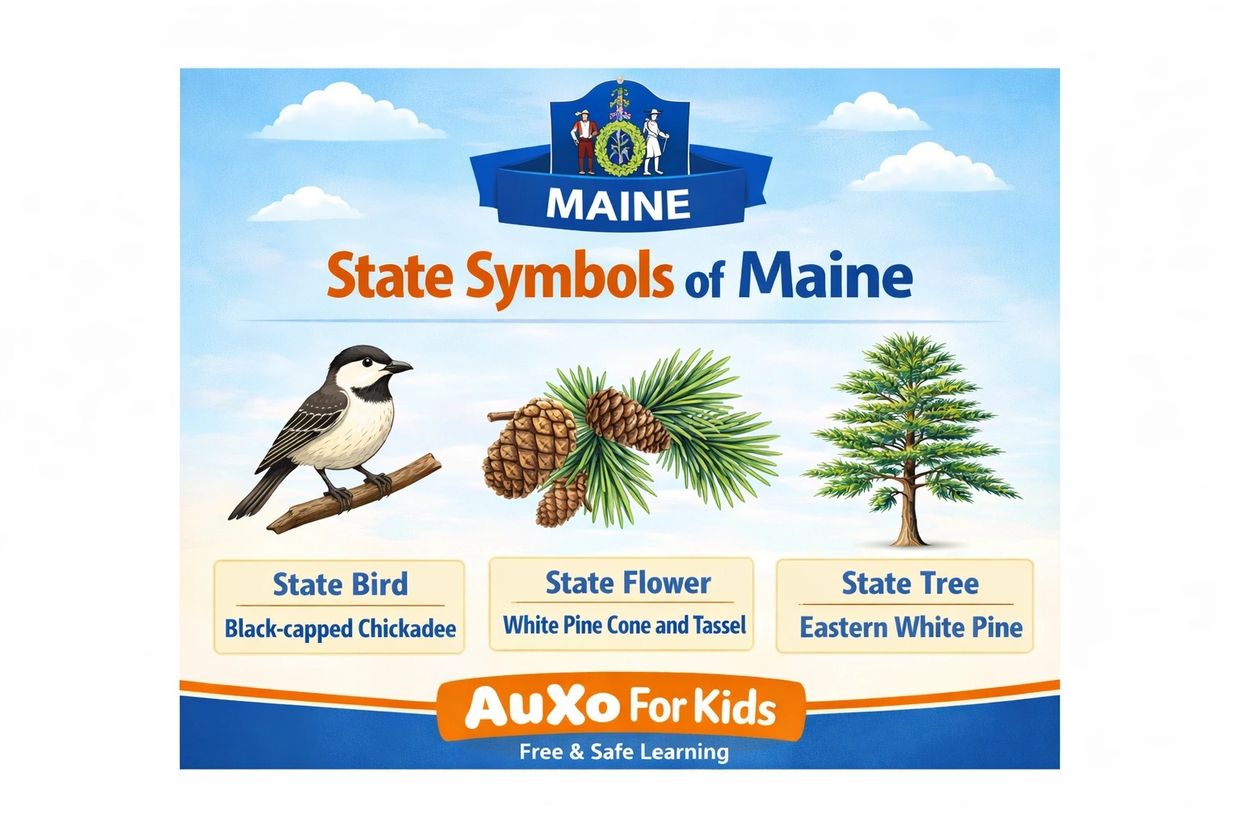
🌿 Maine State Symbols
State symbols help tell the story of a place’s environment and identity.
These symbols represent Maine’s forests and natural resources and are often used to teach children about woodlands, wildlife habitats, and conservation.

🪶 Indigenous Nations of Maine
The land now known as Maine is the ancestral homeland of the Wabanaki Confederacy, which includes the Penobscot, Passamaquoddy, Maliseet, and Mi’kmaq peoples.
For thousands of years, Wabanaki communities lived along rivers, forests, and the Atlantic coast. They developed expert knowledge of fishing, canoe building, seasonal hunting, and sustainable forestry.
The Wabanaki introduced and relied on foods such as corn, beans, squash, berries, maple syrup, fish, shellfish, and wild game.
They are also known for creating birchbark canoes, woven baskets, and tools designed to work with Maine’s forests and waterways. Many place names in Maine come from Wabanaki languages and reflect this lasting influence.
Learning Tip for Kids:
Indigenous knowledge helped people live with the land instead of taking too much from it — a lesson still important today.
✊ Maine & American History
Maine’s history is closely tied to shipbuilding, fishing, and trade. Coastal towns grew around harbors where ships carried goods and ideas across the Atlantic. Maine also played a role in the nation’s expansion and later became its own state in 1820 as part of a major agreement in U.S. history.
Historic sites and museums across Maine help children learn about early communities, ocean travel, and how geography shapes daily life.
🌟 Did You Know? (Kid-Friendly)
Did you know?
Maine has more than 3,000 miles of coastline when all its islands and inlets are counted — more than any other state!
1️⃣ Why This State Matters (For Kids)
Maine matters because it helps kids learn how people can live close to forests and oceans while protecting nature.This section helps kids answer the big question:“Why should I care?”
2️⃣ If You Lived Here…
If you lived in Maine, you might explore forests, walk along rocky beaches, watch for whales, and enjoy foods like lobster, blueberries, and maple syrup.This builds imagination and personal connection.
3️⃣ State Map Thinking
Can you find Maine on a map?Which ocean borders it?Is it closer to Canada or the middle of the United States?This strengthens geography and spatial thinking skills.
4️⃣ Words to Know (Vocabulary Builder)
Perfect for ages 7–12 and classroom use.
5️⃣ Ask a Grown-Up
Ask a grown-up:Why do you think it’s important to protect forests and oceans for the future?This supports AuXo’s family-learning mission and encourages thoughtful conversation.
Opening Statement
New Hampshire is a New England state known for its mountains, forests, lakes, and small towns. Long before it became a state, Indigenous nations lived on and cared for this land, using deep knowledge of nature and seasons. New Hampshire also played an important role in early American independence and helps children learn about freedom, responsibility, and community.
Statehood: June 21, 1788
Capital: Concord
Nickname: The Granite State
State Motto: Live Free or Die
🌿 New Hampshire State Symbols
State symbols help tell the story of a place’s environment and identity.
These symbols represent New Hampshire’s forests, changing seasons, and strong connection to the natural world.
🪶 Indigenous Nations of New HampshireThe land now known as New Hampshire is the ancestral homeland of the Abenaki people.For thousands of years, the Abenaki lived along rivers, forests, and lakes, carefully following the seasons. They introduced and relied on foods such as corn, beans, squash, berries, maple syrup, fish, and wild game. Maple sugaring, still practiced today, comes directly from Indigenous knowledge.The Abenaki also created birchbark canoes, snowshoes, woven baskets, and tools that helped them travel through forests and snowy landscapes. Many rivers and place names in New Hampshire come from Abenaki language and history.Learning Tip for Kids:Many outdoor activities today — like hiking, canoeing, and maple sugaring — are inspired by Indigenous knowledge.
✊ New Hampshire & American IndependenceNew Hampshire was one of the first colonies to create its own government separate from British rule. It played an early role in the fight for independence and was the ninth state to approve the U.S. Constitution, helping make it the law of the land.Historic sites and museums across the state help children learn about early democracy, courage, and standing up for freedom.
🌟 Did You Know? (Kid-Friendly)Did you know?New Hampshire was the first colony to write its own constitution, even before the United States officially became a country!

1️⃣ Why This State Matters (For Kids)
New Hampshire matters because it helped shape early ideas about freedom and self-government in the United States.This section helps kids answer the big question:“Why should I care?”
2️⃣ If You Lived Here…
If you lived in New Hampshire, you might hike in the mountains, swim in lakes, watch fall leaves change color, and enjoy maple syrup made from local trees.This builds imagination and personal connection.
3️⃣ State Map Thinking
Can you find New Hampshire on a map?Which states touch it?Is it closer to the ocean or the mountains?This strengthens geography and spatial thinking skills.
4️⃣ Words to Know (Vocabulary Builder)
Perfect for ages 7–12 and classroom use.
5️⃣ Ask a Grown-UpAsk a grown-up:Why do you think freedom also comes with responsibility?This supports AuXo’s family-learning mission and encourages thoughtful conversation.
Opening Statement
New Hampshire is a New England state known for its mountains, forests, lakes, and small towns. Long before it became a state, Indigenous nations lived on and cared for this land, using deep knowledge of nature and seasons. New Hampshire also played an important role in early American independence and helps children learn about freedom, responsibility, and community.
Statehood: June 21, 1788
Capital: Concord
Nickname: The Granite State
State Motto: Live Free or Die
🌿 New Hampshire State Symbols
State symbols help tell the story of a place’s environment and identity.
These symbols represent New Hampshire’s forests, changing seasons, and strong connection to the natural world.
🪶 Indigenous Nations of New HampshireThe land now known as New Hampshire is the ancestral homeland of the Abenaki people.For thousands of years, the Abenaki lived along rivers, forests, and lakes, carefully following the seasons. They introduced and relied on foods such as corn, beans, squash, berries, maple syrup, fish, and wild game. Maple sugaring, still practiced today, comes directly from Indigenous knowledge.The Abenaki also created birchbark canoes, snowshoes, woven baskets, and tools that helped them travel through forests and snowy landscapes. Many rivers and place names in New Hampshire come from Abenaki language and history.Learning Tip for Kids:Many outdoor activities today — like hiking, canoeing, and maple sugaring — are inspired by Indigenous knowledge.
✊ New Hampshire & American IndependenceNew Hampshire was one of the first colonies to create its own government separate from British rule. It played an early role in the fight for independence and was the ninth state to approve the U.S. Constitution, helping make it the law of the land.Historic sites and museums across the state help children learn about early democracy, courage, and standing up for freedom.
🌟 Did You Know? (Kid-Friendly)Did you know?New Hampshire was the first colony to write its own constitution, even before the United States officially became a country!
1️⃣ Why This State Matters (For Kids)
New Hampshire matters because it helped shape early ideas about freedom and self-government in the United States.This section helps kids answer the big question:“Why should I care?”
2️⃣ If You Lived Here…
If you lived in New Hampshire, you might hike in the mountains, swim in lakes, watch fall leaves change color, and enjoy maple syrup made from local trees.This builds imagination and personal connection.
3️⃣ State Map Thinking
Can you find New Hampshire on a map?Which states touch it?Is it closer to the ocean or the mountains?This strengthens geography and spatial thinking skills.
4️⃣ Words to Know (Vocabulary Builder)
Perfect for ages 7–12 and classroom use.
5️⃣ Ask a Grown-UpAsk a grown-up:Why do you think freedom also comes with responsibility?This supports AuXo’s family-learning mission and encourages thoughtful conversation.
Opening Statement
New Hampshire is a New England state known for its mountains, forests, lakes, and small towns. Long before it became a state, Indigenous nations lived on and cared for this land, using deep knowledge of nature and seasons. New Hampshire also played an important role in early American independence and helps children learn about freedom, responsibility, and community.
Statehood: June 21, 1788
Capital: Concord
Nickname: The Granite State
State Motto: Live Free or Die
🌿 New Hampshire State Symbols
State symbols help tell the story of a place’s environment and identity.
These symbols represent New Hampshire’s forests, changing seasons, and strong connection to the natural world.
🪶 Indigenous Nations of New HampshireThe land now known as New Hampshire is the ancestral homeland of the Abenaki people.For thousands of years, the Abenaki lived along rivers, forests, and lakes, carefully following the seasons. They introduced and relied on foods such as corn, beans, squash, berries, maple syrup, fish, and wild game. Maple sugaring, still practiced today, comes directly from Indigenous knowledge.The Abenaki also created birchbark canoes, snowshoes, woven baskets, and tools that helped them travel through forests and snowy landscapes. Many rivers and place names in New Hampshire come from Abenaki language and history.Learning Tip for Kids:Many outdoor activities today — like hiking, canoeing, and maple sugaring — are inspired by Indigenous knowledge.
✊ New Hampshire & American IndependenceNew Hampshire was one of the first colonies to create its own government separate from British rule. It played an early role in the fight for independence and was the ninth state to approve the U.S. Constitution, helping make it the law of the land.Historic sites and museums across the state help children learn about early democracy, courage, and standing up for freedom.
🌟 Did You Know? (Kid-Friendly)Did you know?New Hampshire was the first colony to write its own constitution, even before the United States officially became a country!
1️⃣ Why This State Matters (For Kids)
New Hampshire matters because it helped shape early ideas about freedom and self-government in the United States.This section helps kids answer the big question:“Why should I care?”
2️⃣ If You Lived Here…
If you lived in New Hampshire, you might hike in the mountains, swim in lakes, watch fall leaves change color, and enjoy maple syrup made from local trees.This builds imagination and personal connection.
3️⃣ State Map Thinking
Can you find New Hampshire on a map?Which states touch it?Is it closer to the ocean or the mountains?This strengthens geography and spatial thinking skills.
4️⃣ Words to Know (Vocabulary Builder)
Perfect for ages 7–12 and classroom use.
5️⃣ Ask a Grown-UpAsk a grown-up:Why do you think freedom also comes with responsibility?This supports AuXo’s family-learning mission and encourages thoughtful conversation.
Opening Statement
New Hampshire is a New England state known for its mountains, forests, lakes, and small towns. Long before it became a state, Indigenous nations lived on and cared for this land, using deep knowledge of nature and seasons. New Hampshire also played an important role in early American independence and helps children learn about freedom, responsibility, and community.
Statehood: June 21, 1788
Capital: Concord
Nickname: The Granite State
State Motto: Live Free or Die
🌿 New Hampshire State Symbols
State symbols help tell the story of a place’s environment and identity.
These symbols represent New Hampshire’s forests, changing seasons, and strong connection to the natural world.
🪶 Indigenous Nations of New HampshireThe land now known as New Hampshire is the ancestral homeland of the Abenaki people.For thousands of years, the Abenaki lived along rivers, forests, and lakes, carefully following the seasons. They introduced and relied on foods such as corn, beans, squash, berries, maple syrup, fish, and wild game. Maple sugaring, still practiced today, comes directly from Indigenous knowledge.The Abenaki also created birchbark canoes, snowshoes, woven baskets, and tools that helped them travel through forests and snowy landscapes. Many rivers and place names in New Hampshire come from Abenaki language and history.Learning Tip for Kids:Many outdoor activities today — like hiking, canoeing, and maple sugaring — are inspired by Indigenous knowledge.
✊ New Hampshire & American IndependenceNew Hampshire was one of the first colonies to create its own government separate from British rule. It played an early role in the fight for independence and was the ninth state to approve the U.S. Constitution, helping make it the law of the land.Historic sites and museums across the state help children learn about early democracy, courage, and standing up for freedom.
🌟 Did You Know? (Kid-Friendly)Did you know?New Hampshire was the first colony to write its own constitution, even before the United States officially became a country!
1️⃣ Why This State Matters (For Kids)
New Hampshire matters because it helped shape early ideas about freedom and self-government in the United States.This section helps kids answer the big question:“Why should I care?”
2️⃣ If You Lived Here…
If you lived in New Hampshire, you might hike in the mountains, swim in lakes, watch fall leaves change color, and enjoy maple syrup made from local trees.This builds imagination and personal connection.
3️⃣ State Map Thinking
Can you find New Hampshire on a map?Which states touch it?Is it closer to the ocean or the mountains?This strengthens geography and spatial thinking skills.
4️⃣ Words to Know (Vocabulary Builder)
Perfect for ages 7–12 and classroom use.
5️⃣ Ask a Grown-UpAsk a grown-up:Why do you think freedom also comes with responsibility?This supports AuXo’s family-learning mission and encourages thoughtful conversation.
Opening Statement
New Hampshire is a New England state known for its mountains, forests, lakes, and small towns. Long before it became a state, Indigenous nations lived on and cared for this land, using deep knowledge of nature and seasons. New Hampshire also played an important role in early American independence and helps children learn about freedom, responsibility, and community.
Statehood: June 21, 1788
Capital: Concord
Nickname: The Granite State
State Motto: Live Free or Die
🌿 New Hampshire State Symbols
State symbols help tell the story of a place’s environment and identity.
These symbols represent New Hampshire’s forests, changing seasons, and strong connection to the natural world.
🪶 Indigenous Nations of New HampshireThe land now known as New Hampshire is the ancestral homeland of the Abenaki people.For thousands of years, the Abenaki lived along rivers, forests, and lakes, carefully following the seasons. They introduced and relied on foods such as corn, beans, squash, berries, maple syrup, fish, and wild game. Maple sugaring, still practiced today, comes directly from Indigenous knowledge.The Abenaki also created birchbark canoes, snowshoes, woven baskets, and tools that helped them travel through forests and snowy landscapes. Many rivers and place names in New Hampshire come from Abenaki language and history.Learning Tip for Kids:Many outdoor activities today — like hiking, canoeing, and maple sugaring — are inspired by Indigenous knowledge.
✊ New Hampshire & American IndependenceNew Hampshire was one of the first colonies to create its own government separate from British rule. It played an early role in the fight for independence and was the ninth state to approve the U.S. Constitution, helping make it the law of the land.Historic sites and museums across the state help children learn about early democracy, courage, and standing up for freedom.
🌟 Did You Know? (Kid-Friendly)Did you know?New Hampshire was the first colony to write its own constitution, even before the United States officially became a country!
1️⃣ Why This State Matters (For Kids)
New Hampshire matters because it helped shape early ideas about freedom and self-government in the United States.This section helps kids answer the big question:“Why should I care?”
2️⃣ If You Lived Here…
If you lived in New Hampshire, you might hike in the mountains, swim in lakes, watch fall leaves change color, and enjoy maple syrup made from local trees.This builds imagination and personal connection.
3️⃣ State Map Thinking
Can you find New Hampshire on a map?Which states touch it?Is it closer to the ocean or the mountains?This strengthens geography and spatial thinking skills.
4️⃣ Words to Know (Vocabulary Builder)
Perfect for ages 7–12 and classroom use.
5️⃣ Ask a Grown-UpAsk a grown-up:Why do you think freedom also comes with responsibility?This supports AuXo’s family-learning mission and encourages thoughtful conversation.